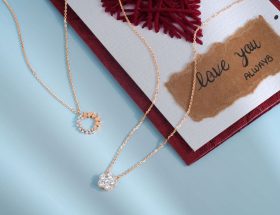
Layering gold necklaces does not fail because you own too many chains. The common problem is placing chains with similar lengths, weights, and link shapes in the same small area. They catch, twist, and climb over one another as you move.
The fix is simple: create space, vary texture, and give every necklace a clear job. A good stack should still look intentional after a commute, a coffee run, or eight hours at your desk. The most wearable 2026 approach uses two or three gold necklaces with different lengths, one focal pendant, and enough breathing room between each layer.
Why gold necklaces tangle in the first place
Gold chains tangle because they behave like flexible wires. When two necklaces have the same length, they sit on the same part of your chest. Your hair, collar, skin, and the pendants themselves create friction. Every turn of your head shifts the chains, and the links begin to hook into one another.
Thin chains are especially prone to this problem. Their small links move easily and can slip through the larger links of a second necklace. A flat herringbone chain creates a different issue: it may not knot like a cable chain, but it can fold, twist, and catch against a textured piece. A heavy pendant pulls its chain toward the center, which can drag a lighter chain into the same path.
Length creates the first layer of protection
Start with at least a 2-inch gap between the center points of your necklaces. A practical three-piece stack might use a 16-inch chain, an 18-inch chain, and a 22-inch chain. On a shorter neck, use 15, 17, and 20 inches. On a longer neck or over a high crew neck, use 16, 20, and 24 inches.
Do not judge the spacing from the clasp. Measure from the front center of each necklace while wearing it. A 16-inch chain with a large pendant may visually reach the same point as an 18-inch plain chain.
Movement matters more than matching
Two delicate cable chains may look elegant when you first put them on, but they move in the same way. That makes them more likely to overlap. Pairing a smooth 1 mm cable chain with a small paperclip chain or a beaded chain creates different movement patterns. The pieces separate more naturally as you walk.
My firm rule is to limit a daily stack to three necklaces unless one piece is very short and rigid. Four or five chains can work for a styled photo, but the extra weight and movement usually make a real outfit feel busy and increase tangling.
Which necklace lengths and chain shapes work best?
The best no-tangle combination uses one close-to-the-neck chain, one medium chain, and one longer pendant chain. The table below gives a reliable starting point for most outfits.
| Layer | Suggested length | Best chain shape | What it does |
|---|---|---|---|
| Short | 15-16 inches | Fine cable, box, or curb chain | Frames the collarbone |
| Middle | 18-20 inches | Small paperclip, bead, or rolo chain | Adds texture and visible separation |
| Long | 22-24 inches | Fine cable with a light pendant | Creates a vertical focal point |
| High-neck option | 24-26 inches | Medium rolo or wheat chain | Shows over sweaters and crew necks |
Use texture to keep each layer visible
Texture is more useful than matching. A polished cable chain can disappear beside another polished cable chain, even when the lengths differ by only one inch. A paperclip chain, bead chain, or lightly twisted rope chain catches light differently and makes the separation easier to see.
For 2026, the strongest styling direction is mixed scale rather than a perfectly identical set. Combine a fine chain with a medium link and one simple charm. Keep the color consistent if you want a clean look. Yellow gold reads most naturally as one group, while mixing yellow and white gold works best when the contrast appears at two deliberate points rather than in every layer.
Match pendant size to chain width
A heavy pendant belongs on a chain that can carry its weight. A 1 mm cable chain looks delicate with a small disc or initial, but a large coin can pull it forward and cause it to cross another layer. Keep a pendant under about 15 mm wide for a very fine chain. Use a 1.5 mm or thicker chain for a larger charm.
The clear winner for an everyday three-piece stack is a 16-inch fine chain, an 18-inch textured chain, and a 22-inch pendant necklace. That spacing works with open shirts, scoop necks, knit tops, and simple dresses without needing constant adjustment.
How to assemble a no-tangle necklace stack
Put the necklaces on in a controlled order. The five-step method below takes less than two minutes and prevents most knots before they start.
- Lay out the chains first. Place every necklace on a flat towel and arrange them from shortest to longest. Check that the clasps and pendants are not already caught in the links.
- Choose one anchor piece. Make the shortest necklace your anchor. Pick a chain that sits close to the collarbone and has a secure lobster clasp. Do not start with the heaviest pendant.
- Add the middle layer with a different texture. Leave at least 2 inches between the center points. If the first chain is a fine cable, use a small paperclip, rolo, or bead chain next.
- Place the longest piece last. A pendant should sit below the other chains. Keep its chain slim enough to move but strong enough to hold the pendant without pulling sideways.
- Test the stack in motion. Turn your head, lift both arms, bend forward, and walk around for one minute. If two pieces meet at the same point, change the length before leaving the house.
A jewelry spacer can help when you wear two delicate chains every day. This small connector joins the clasps at the back while keeping the necklaces separated at the front. It does not make a badly planned stack perfect, so fix the lengths first. Use a spacer as a stabilizer, not as a substitute for spacing.
How to stop a pendant from sliding sideways
Check the balance of the pendant bail. A pendant with a narrow bail can catch on a neighboring chain and pull it across your chest. A smooth, centered bail moves more cleanly. If the pendant keeps rotating, wear it on the longest layer and remove one nearby chain.
Store each necklace flat or hang it from an individual hook. Never throw several fine chains into one jewelry dish. Unclasp the necklace, close the clasp through the end ring, and place it in a soft pouch. That small habit saves more time than trying to separate a knot later.
What to buy for a practical 2026 gold stack

My strongest recommendation is to buy one durable base chain first, then add one textured layer and one personal pendant. A complete set is less useful than three pieces with different jobs. Spend the most on the base chain because it carries the rest of the stack and gets the most wear.
Best everyday base: Mejuri Chain Necklace
The Mejuri Chain Necklace in 14k yellow gold is a strong starting point because it comes in 16-18-inch and 20-22-inch options. The chain is listed at 0.95 mm thick, and the price starts around $178 in the current US listing. Choose the shorter length as a close layer or the longer length as a simple second chain. The solid-gold construction makes more sense than plated metal for a necklace you plan to wear under other pieces.
Verdict: choose this as the base if you want one clean chain that can stay in rotation with workwear, denim, and evening clothes.
Best budget texture: GLDN Mini Paperclip Chain
The GLDN Mini Paperclip Chain gives a fine stack some shape without the weight of a large statement link. Look for the 14k gold-fill version when you want a lower entry price, or select solid 14k gold for a long-term daily piece. The small elongated links are easier to see beside a cable chain than another ultra-thin chain. Gold-fill is the better choice for occasional wear; solid gold is the better choice for frequent showering, sweating, and repeated layering.
Verdict: choose the mini paperclip style as the middle layer when your current necklaces all look too similar.
Best personal detail: Mejuri Love Charm or Gothic Letter Pendant
The Mejuri Love Charm is listed around $98, while the Gothic Letter Pendant is listed around $168. Both add a clear focal detail without requiring a large, heavy pendant. Put the charm on a 20-22-inch chain so it does not sit directly on the shortest necklace. The Gothic Letter Pendant has a stronger visual presence, so keep the other layers plain.
Verdict: choose the Love Charm for a subtle everyday stack and the Gothic Letter Pendant when the necklace should be the main accessory.
Skip a solid-gold purchase if you rarely wear necklaces, react to a specific alloy, or prefer changing jewelry with every outfit. A well-made gold-filled or vermeil piece can be the smarter buy for occasional styling. Do not pay for 14k gold simply to copy a trend when you have not yet tested the length and shape you actually like.
Which mistakes make necklace stacks look messy?
Most tangles come from a few predictable choices. Fix these before buying another chain.
- Using three chains within one inch of each other: They compete for the same space and will overlap quickly.
- Putting the heaviest pendant in the middle: It pulls the center chain downward and drags lighter chains with it.
- Mixing too many finishes: High-shine cable, hammered links, beads, and a large charm can look accidental when every piece demands attention.
- Sleeping in a complicated stack: Pillow friction twists chains and catches pendants in hair. Remove the stack at night.
- Applying perfume over the jewelry: Alcohol and fragrance oils can dull some finishes and leave residue between links. Spray first, let it dry, then put on the necklaces.
- Buying a very fine chain for a large pendant: The chain may kink, stretch, or break at the bail.
The best correction is usually removal, not addition. Take off the chain that repeats another piece’s length or texture. A two-necklace stack with clear spacing looks more polished than five chains fighting for the same neckline.
Gold necklace layering questions shoppers ask
How many gold necklaces should I layer?
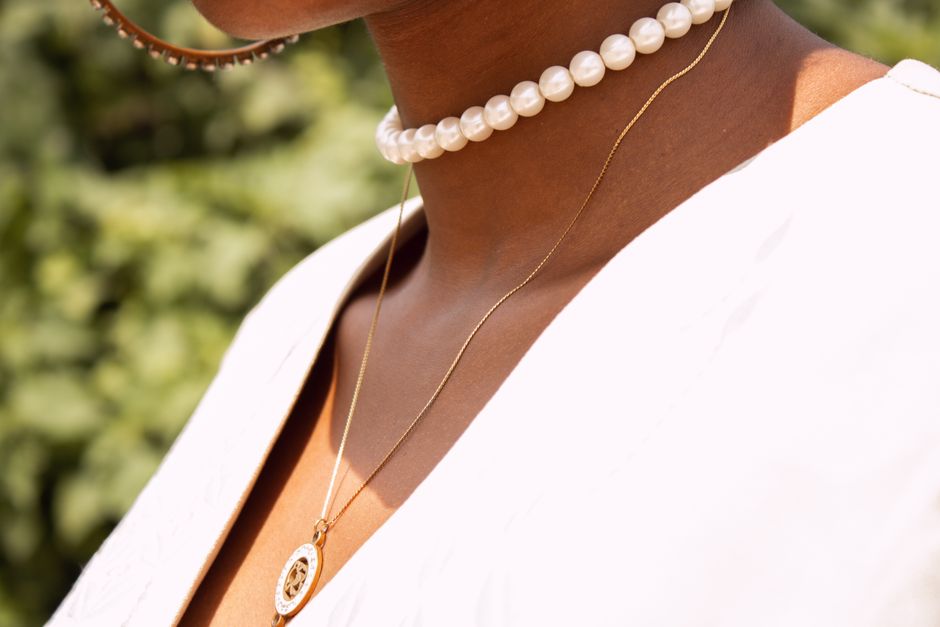
Three is the best daily limit for most people. Use two when the necklaces are bold, textured, or paired with large earrings. Add a fourth only when one piece is a very short choker or a lightweight thread-style chain that does not occupy the same area as the others.
Can different gold shades be layered?
Yes, but make the contrast deliberate. Yellow gold with white gold looks clean when the shortest and longest layers share one color and the middle piece supplies the contrast. Avoid mixing three different tones unless the outfit is simple and the jewelry is the main styling feature.
What should I do if my necklaces tangle while I am wearing them?
Stop pulling. Hold the clasp of each necklace and separate the pendants first. Lay the chains against a flat surface, then use a sewing needle or fine pin to loosen the knot from its center. A drop of mineral oil can help with a stubborn knot, but clean the chain afterward with a soft, dry cloth.
Is a necklace spacer worth buying?
Yes, if your chains already have sensible length gaps and still rotate during the day. A spacer is most useful for two delicate necklaces with similar clasps. It cannot solve chains that are too close in length, heavy pendants, or poor storage.
What is the easiest stack to copy in 2026?
Wear a 16-inch fine yellow-gold chain, an 18- or 20-inch textured chain, and a 22-inch necklace with a small personal pendant. Keep the shapes simple and let one piece carry the story. The next phase of necklace styling will favor adaptable chains and removable charms, giving one well-planned base more ways to change with an outfit.