You have a dinner at 8 PM but you’ve been running errands since noon. Your black slip dress is the only thing in your bag that works for both. You need to look polished for the restaurant without looking overdressed at the grocery store. That’s the exact problem this guide solves.
This isn’t about buying a “convertible dress” from an Instagram ad. It’s about taking the dresses already in your closet and making them work for two completely different settings. I’ll name the exact brands, the specific accessories, and the precise steps. No fluff.
The Core Problem: Your Dress Reads One Way and You Need It to Read Another
A dress telegraphs a message. A silk slip dress says “evening.” A cotton shirt dress says “errands.” The trick isn’t changing the dress — it’s changing the context around it.
Context is built from three things: footwear, outer layer, and accessories. Change any two of these, and you’ve changed the entire outfit’s signal. You don’t need a new dress. You need a new combination.
Why most people fail at this
They try to make the dress work for both by adding nothing. They wear the same sandals, the same bag, the same earrings, and wonder why they feel underdressed at dinner. The dress didn’t change. Neither did anything else.
The fix is deliberate contrast. Day version = flat shoes, casual layer, minimal jewelry. Night version = heel or pointed flat, structured layer, statement accessory. That’s the formula. Memorize it.
The one exception: fabric choice
Satin, silk, and velvet read as evening fabrics. Cotton, linen, and chambray read as daytime. If you’re trying to style a satin slip dress for a 10 AM coffee run, you’re fighting an uphill battle. It can be done (see below) but you’ll need more aggressive layering. A cotton shirtdress flips to night much easier — just add a heel and a bold earring. Keep this in mind when shopping next time.
Day Look: The Slip Dress as a Casual Errand Outfit
Let’s use a specific dress: the Reformation Sasha Slip Dress in black ($248, 100% viscose). It’s a classic bias-cut slip with a V-neck. Reads evening by default. Here’s how to make it read Saturday morning.
Step 1: Add a white cotton t-shirt underneath. The Uniqlo Supima Cotton Crew Neck T-Shirt ($14.90) works perfectly. The contrast between the casual tee fabric and the dress’s sheen kills the formal vibe instantly. Let the tee’s collar and hem peek out.
Step 2: Swap the heels for sneakers. The Veja V-10 ($170, leather and mesh) in white. Flat, chunky, sporty. The silhouette shift from delicate to athletic is what breaks the evening code.
Step 3: Add a denim jacket. The Levi’s Original Trucker Jacket ($98, 100% cotton) in light wash. Unstructured, faded, casual. It weighs down the dress’s slinkiness.
Step 4: Swap the bag. Ditch the clutch. Use a canvas tote — the Madewell Transport Tote ($168, 14 oz cotton canvas). It’s big, slouchy, and says “I’m carrying a water bottle and a book.”
Result: You now look like someone who grabbed a dress because it was comfortable, not because you’re going somewhere fancy. The dress is still the same. The context is completely different.
Night Look: The Same Slip Dress as a Dinner Outfit
Now reverse everything. Same Reformation slip dress. Different context.
Step 1: Remove the tee. The dress stands alone. No layering piece underneath. The V-neck and bare arms signal evening.
Step 2: Swap sneakers for pointed-toe heels. The Sam Edelman Hazel Pump ($110, leather, 3.5-inch heel). Pointed toe elongates the leg. The thin heel is delicate and intentional. This single swap does more for the night shift than any other change.
Step 3: Add a structured blazer. The Everlane The Italian ReWool Blazer ($228, 100% recycled wool) in black or charcoal. Shoulder pads. Tailored fit. It adds shape and formality. No more denim slouch.
Step 4: Swap the bag. Canvas tote goes away. Bring a small crossbody or clutch. The Madewell The Medium Crossbody Bag ($138, leather) in black. Compact, structured, polished.
Step 5: Add one statement earring or a bold lip. A red lip (MAC Ruby Woo, $22) or a gold hoop earring (Mejuri Croissant Hoop, $80, 14k gold vermeil) is enough. You don’t need a full face of makeup. One deliberate choice signals effort.
Result: Same dress. Different person. The transformation takes exactly 3 minutes.
The Accessory Swap Cheat Sheet (Table)
Print this. Tape it inside your closet door.
| Element | Day Version | Night Version |
|---|---|---|
| Shoes | White sneakers (Veja V-10, $170) | Black pointed pump (Sam Edelman Hazel, $110) |
| Outer layer | Denim jacket (Levi’s Trucker, $98) | Tailored blazer (Everlane ReWool, $228) |
| Bag | Canvas tote (Madewell Transport, $168) | Leather crossbody (Madewell Medium, $138) |
| Base layer | White crew neck tee (Uniqlo, $14.90) | None (bare skin) |
| Jewelry | Minimal studs or none | One statement hoop or bold earring |
| Lip color | Tinted balm or nothing | Bold red or deep berry (MAC Ruby Woo, $22) |
The total cost of all the day accessories: roughly $450. The total cost of all the night accessories: roughly $498. Compare that to buying a second dress for $200-$400. The accessories last years and work with everything else in your closet.
What About a Shirt Dress? The Opposite Problem
A shirtdress reads daytime by default. Think of the Everlane The Cotton Shirtdress ($98, 100% organic cotton). It’s button-down, collared, and belted. It looks like you’re going to a farmer’s market. Here’s how to push it into evening territory.
The mistake people make: They wear the shirtdress exactly as-is to dinner. Buttons all done up. Belt cinched. Flats on feet. It still reads daytime. You need to break the structure.
Step 1: Unbutton the top 2-3 buttons. Creates a deeper V-neck. Instantly less conservative.
Step 2: Remove the belt. Let the dress hang loose. The relaxed fit reads more intentional and less “uniform.”
Step 3: Roll up the sleeves. Above the elbow. Adds a casual undone quality that paradoxically looks more styled for evening.
Step 4: Add a heeled bootie. The Sam Edelman Lagusa Bootie ($150, leather, 2.75-inch block heel). The block heel is comfortable enough to stand in but formal enough to signal a shift.
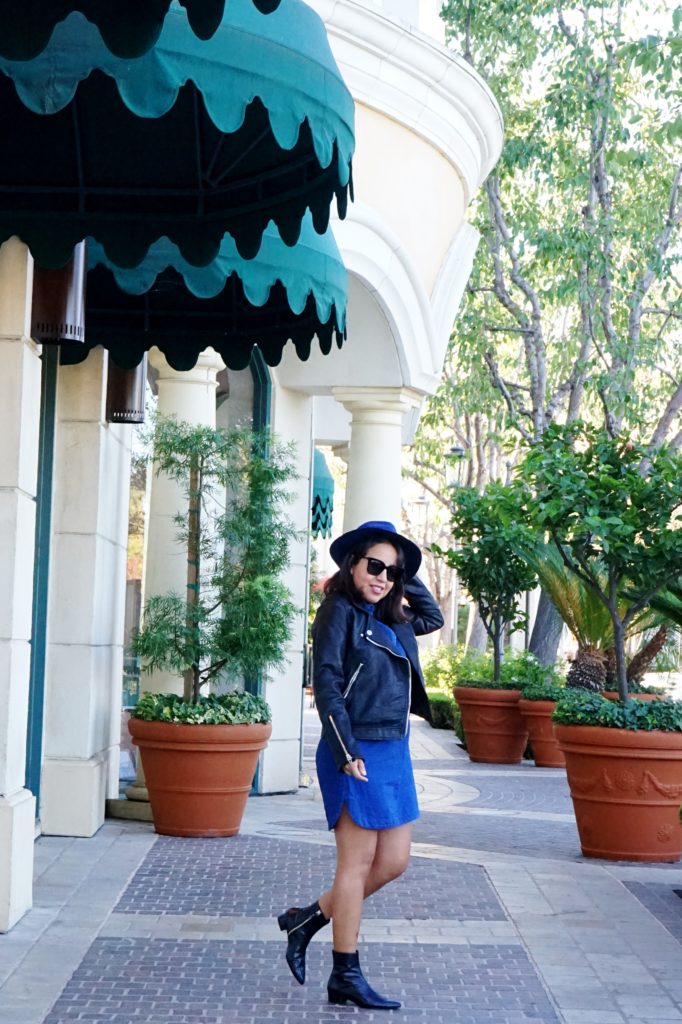
Step 5: Layer a leather jacket over it. Not a blazer. A moto jacket. The AllSaints Balfern Leather Jacket ($750, lambskin) in black. The contrast of feminine cotton dress + tough leather is what makes it read nighttime.
Result: A shirtdress becomes a date-night outfit without buying a new dress. Total transformation time: 2 minutes.
Common Mistakes That Ruin the Transformation
These are the failure modes I see on the street and in photos. Avoid them.
- Keeping the same shoes. You cannot wear the same sneakers to day and night and expect a different result. Shoes are the single strongest context cue. Change them first.
- Adding a cardigan instead of a jacket. A cardigan reads cozy and domestic. It does not read evening. Use a structured blazer or a leather jacket. The structure is what matters.
- Over-accessorizing both versions. If you wear a necklace, earrings, and a bracelet during the day, you have nowhere to go for night. Keep day minimal. Save the statement piece for night. The contrast is the point.
- Ignoring the bag. A giant tote bag kills any evening vibe instantly. Swap to a small bag. It’s a 5-second change that makes a disproportionate difference.
- Trying to do this with a dress that’s too short. A mini dress with a 12-inch hemline reads party, not daytime. You can’t layer a tee under it without looking costumey. Stick to midi or knee-length dresses for this trick to work cleanly.
When NOT to Style One Dress Two Ways
This approach has limits. Here’s when it’s better to just pack a second outfit.
1. Extreme formality gap. If your day involves a muddy kids’ soccer game and your night involves a Michelin-star restaurant, one dress won’t bridge that gap. The fabric will get ruined. The mud won’t come off. Bring a change of clothes.
2. The dress is too trendy. A dress with cutouts, fringe, or sequins reads one way only. You can’t neutralize cutouts with a blazer. The silhouette is fixed. Save the one-dress-two-ways trick for solid colors, simple shapes, and neutral fabrics.
3. You’re going from work to a formal event. If your day is a corporate office (blazer required) and your night is a black-tie gala, the same dress won’t work. The fabric weight and silhouette requirements are too different. You need a separate evening gown.
4. You don’t own the right accessories. If your closet contains only sneakers and one canvas tote, you can’t transform a dress for night. The accessories are the mechanism. You need at least one pair of heels and one structured jacket to make this work. If you don’t have those, buy them before you try this method.
The honest recommendation: For most people, a simple midi dress in a neutral color (black, navy, olive) with a set of day accessories and a set of night accessories will cover 80% of your social calendar. The other 20% — weddings, galas, interviews — deserve a dedicated outfit. Don’t force this trick where it doesn’t fit.