The dress code on the invitation tells you how formal to be. It does not tell you what to actually wear. Getting that distinction wrong is why so many wedding guests show up in the right formality level but the completely wrong outfit for where they actually are.
Why Dress Codes Lie at Destination Weddings
Couples write “cocktail attire” because it signals the vibe they want — not because they’ve thought through what that means on a Caribbean beach at 87°F versus inside a Venetian palazzo in November. The phrase does one job. It ignores everything else.
Before you shop or pack, answer three questions first: What is the ground surface at the ceremony — sand, grass, cobblestone, hardwood? What is the average temperature for that location in that month? Is there an outdoor ceremony followed by an indoor reception that might require a different look entirely? The dress code answers none of these questions.
The most expensive mistake destination wedding guests make is buying a structured cocktail dress for a tropical outdoor ceremony. It photographs stiffly, restricts movement on the dance floor, and becomes visibly uncomfortable in heat and humidity well before the reception ends. The second most common mistake: underdressing for a formal European venue because “garden party” sounds casual — it does not, in Italy or France.
Climate drives the fabric decision. Formality drives the silhouette. Everything else — color, accessories, heel height — follows from those two choices, in that order.
Tropical and Beach Wedding Guest Outfits That Actually Work
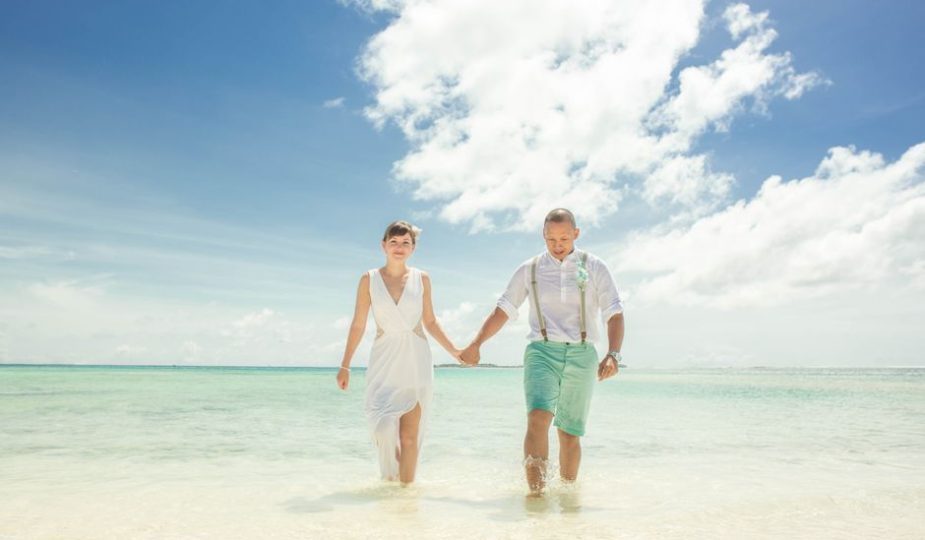
Fabric is the only decision that matters in heat and humidity. Everything else is secondary. A dress that looks beautiful under boutique lighting can become unwearable at a Bali outdoor reception or a Tulum beach ceremony. Polyester traps heat. Heavy satin holds it. Structured boning doesn’t ventilate. None of these belong at a tropical wedding.
Which fabrics work and which ones to skip
- Chiffon: Floats in warm air, dries quickly after perspiration, moves beautifully in outdoor photos — the strongest all-around choice
- Linen: Breathes better than any other fabric, wrinkles fast but recovers well in humidity
- Lightweight crepe: More polished than linen, wrinkle-resistant, holds shape through a long reception evening
- Gauze and cotton voile: Appropriate for daytime beach ceremonies, too casual for anything with a formal dinner reception
- Skip entirely: Polyester, structured satin, velvet, anything with boning or a heavy lining
Specific brands and prices worth knowing
The Reformation Linen Midi Dress ($248) packs flat, arrives in reasonable shape, and reads as deliberate rather than overdressed at a garden or beach reception. Ghost London slip dresses ($180–$220) use a viscose knit that mimics the look of silk, handles humidity without clinging, and recovers from suitcase compression better than actual silk ever will. For a more accessible price point, BHLDN chiffon wrap dresses in the $130–$160 range are purpose-built for outdoor ceremonies — and they photograph well against sand and open water.
For footwear: skip stilettos if there is any sand, grass, or gravel involved. Castañer espadrille wedges ($110–$145) give you elevation and formality without sinking into soft ground. Sam Edelman block-heel sandals ($80–$100) offer stability on uneven surfaces and dress up easily with the right silhouette.
Mountain and Cold Climate Wedding Attire: What to Pack
Cold-destination weddings get under-packed more consistently than any other type. Guests assume the venue is heated — and it is. The outdoor ceremony on a mountain terrace in December is not. The twenty steps from the parking area to the entrance are not. Pack accordingly.
| Destination Type | Right Outfit | Key Layer | Footwear |
|---|---|---|---|
| Mountain winter (below 35°F) | Velvet midi dress or formal trousers + silk blouse | Fitted wool wrap or faux-fur stole | Block-heel ankle boots |
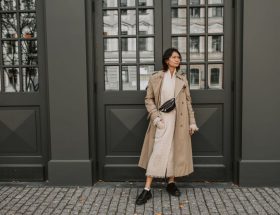
| Cool European city (45–60°F) | Structured midi dress or tailored jumpsuit | Long blazer or wool trench coat | Block-heel pumps or dressy loafers |
| Autumn vineyard (55–65°F) | Jewel-tone midi in rust, burgundy, or forest green | Tailored blazer in coordinating tone | Block heel or kitten heel |
| Mild mountain (60–70°F) | Floral wrap dress or A-line midi | Suede or denim jacket for ceremony | Wedges or low block heel |
Anthropologie carries velvet midi dresses seasonally in the $150–$200 range that work for cold-weather ceremonies and photograph with richness indoors. Banana Republic’s Heritage line offers tailored formal trousers that pack without losing their crease — pair with a silk or satin blouse for a complete look that reads formal without requiring a gown.
European City Weddings: The Formality Trap
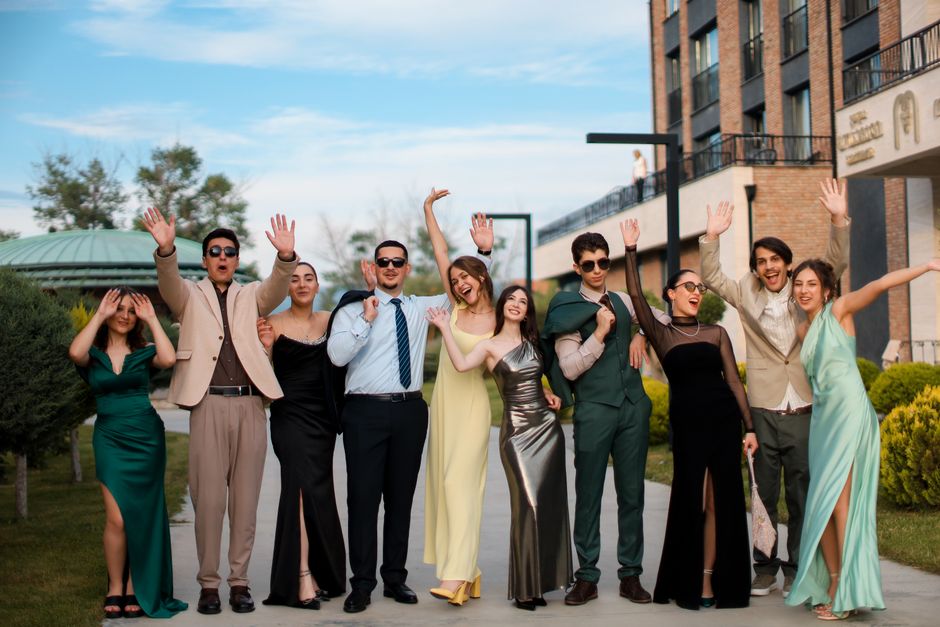
Wear more than you think you need. That’s the verdict. Here’s why it matters.
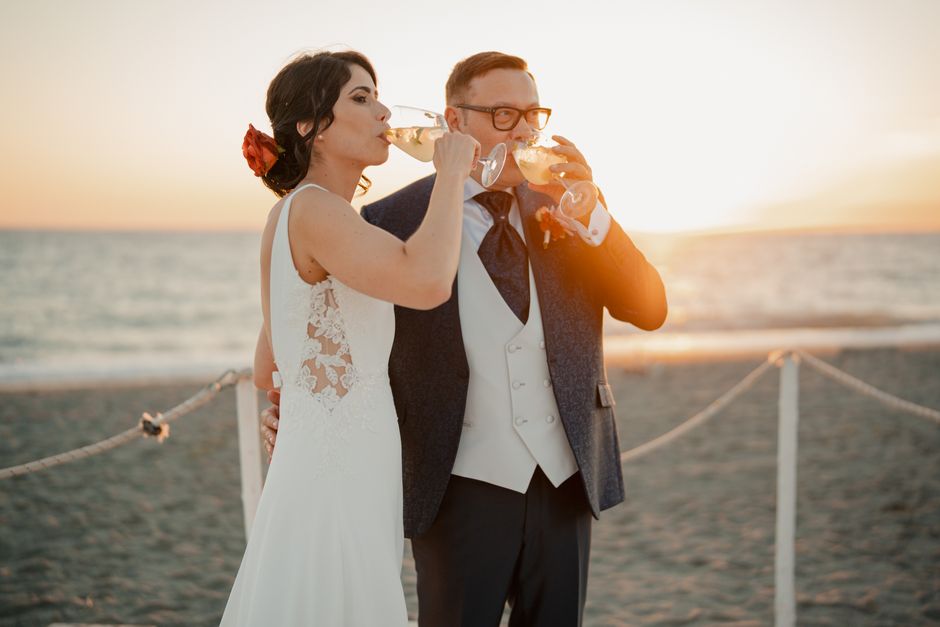
European weddings — particularly in Italy, France, and Spain — run substantially more formal than American guests expect. A cocktail dress that reads as polished in the US often reads visibly underdressed inside a Florentine villa or a Parisian château. The guest who arrives slightly overdressed for a casual setting gets called elegant. The guest who arrives underdressed at a formal European wedding spends the evening feeling conspicuous. The asymmetry strongly favors packing more.
A practical packing list for European destination weddings
- One floor-length or tea-length formal dress as the primary outfit — not a standard cocktail length
- A tailored blazer that can double as outerwear for travel days or layering at cooler outdoor venues
- Closed-toe heels or kitten-heel mules — cobblestones destroy stilettos, and open-toe sandals read too casual for most formal European receptions
- A small structured clutch — an oversized tote or crossbody reads casual regardless of what else you’re wearing
- A pashmina or silk wrap for church ceremonies, where covered shoulders are required at nearly every religious venue in Italy, Spain, and Greece
M.M. LaFleur’s formal separates are built for exactly this situation: wrinkle-resistant fabric, conservative cuts that read as deliberately polished, and blazers with wide-leg trousers that run $150–$225 per piece and consistently look more expensive than that price point suggests.
The Heel Problem at Outdoor Venues
Stilettos are wrong for roughly 90% of destination weddings. Sand, grass, gravel, cobblestone, wooden docks, and hillside terraces all punish narrow heels. Block heels, wedges, and kitten heels give you formality and elevation without the sinking problem.
More importantly: choose the shoe before you finalize the dress. The ground surface at that venue determines your footwear. The footwear determines which silhouette makes sense. Working in reverse — buying a dress then hunting for matching shoes — is how guests end up in inappropriate footwear for the venue.
How to Pack Wedding Guest Clothes Without Ruining Them
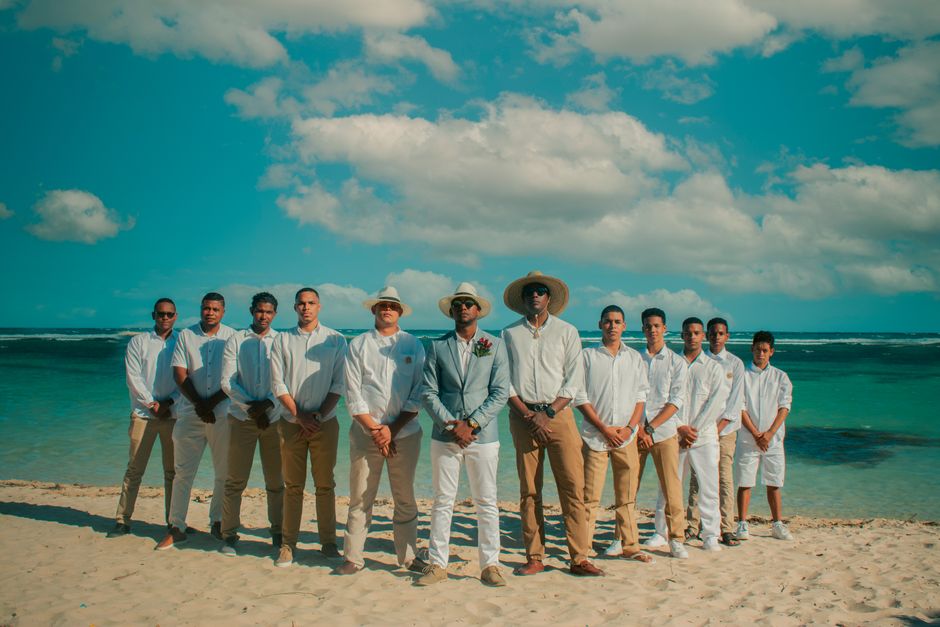
Most formal clothes arrive at a destination wedding wrinkled and compressed — not because the guest didn’t care, but because they applied casual packing methods to formal fabrics. Three specific changes fix most of this.
Rolling is for casual clothes, not formal wear
Rolling works well for t-shirts and jeans. For dresses and formal trousers, fold along the seams, stuff the interior of the garment with tissue paper or a soft cotton t-shirt to hold its shape, and lay it flat in the suitcase on top of everything else. Chiffon tolerates loose rolling without damage. Structured silk and crepe do not.
Use a garment bag for anything floor-length
Most airlines allow a hanging garment bag as a carry-on item — check before you fly, but the answer is usually yes. A basic AmazonBasics Hanging Garment Bag ($25) protects a gown better than any suitcase packing method. Hang it in the hotel room immediately on arrival. Most travel wrinkles fall out within two to three hours without any steaming required.
Request the hotel steamer at check-in, not the morning of
Ask when you arrive at the hotel, not when you wake up on wedding day. Many properties have a steamer available on request. If yours doesn’t, the Conair Travel Smart Fabric Steamer weighs under a pound, costs about $30, and removes most wrinkles in five minutes flat. It’s worth packing for any trip that involves a formal outfit.
Climate Quick-Reference: Right Outfit by Venue Type
The misconception this article opened with — that a dress code tells you what to wear — collapses entirely when you see how differently the same formality level has to be executed across climates. This table compresses the key decisions.
| Venue Type | Right Outfit | Avoid |
|---|---|---|
| Tropical beach (outdoor) | Chiffon or linen midi, wedge or block-heel sandal | Structured cocktail dress, stilettos, polyester fabrics |
| Mountain winter (cold outdoor) | Velvet dress or formal suit, block-heel ankle boots | Bare shoulders, thin fabrics, open-toe shoes |
| European formal (indoor/outdoor) | Floor-length or tea-length, closed-toe heels, silk wrap | Short hemlines, casual fabrics, large shoulder bags |
| Autumn vineyard (mild outdoor) | Jewel-tone midi, coordinating blazer, block heel | White, cream, or pastel too close to the bridal palette |
| Desert (Sedona, Marrakech) | Flowy maxi in warm earth tones, flat or low sandal | Dark fabrics that absorb heat, narrow heels in sand |
| Indoor ballroom (any climate) | Standard cocktail or formal based on invitation | Casual fabrics regardless of outside temperature |
The guest who packed for the venue — not just the formality line on the invitation — is the one who dances comfortably, photographs well in the outdoor light, and doesn’t spend the reception managing an outfit that wasn’t built for where they actually are. Dress code first, climate second, everything else third.