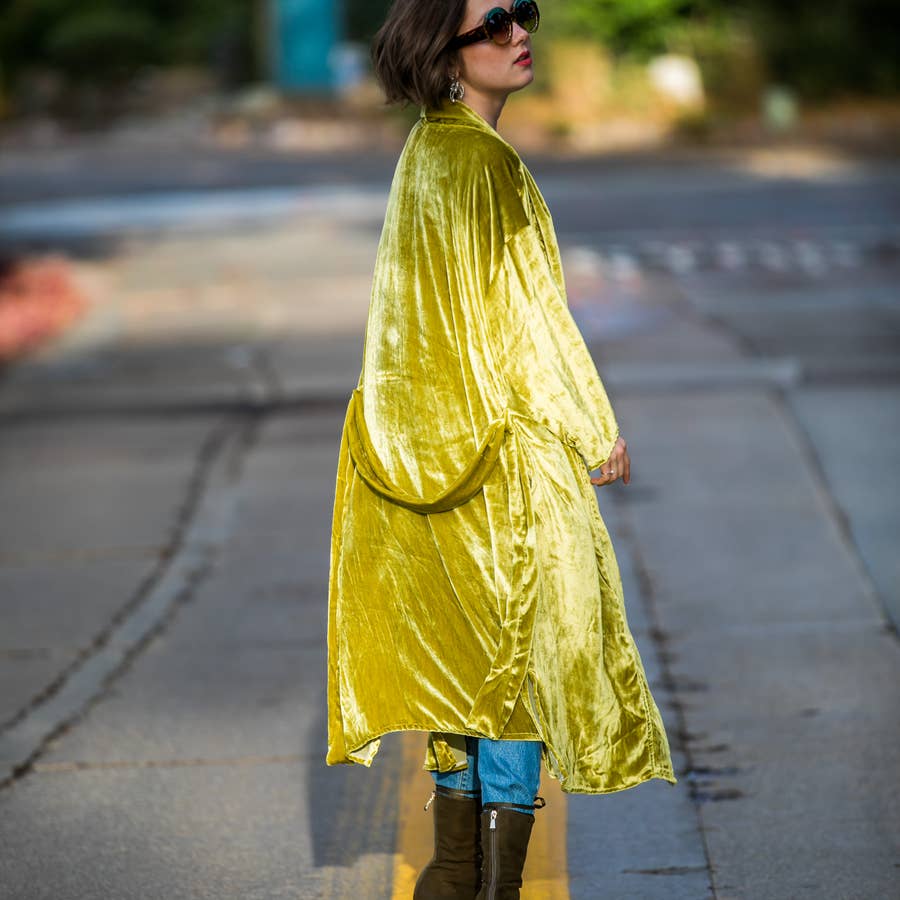
In December 2026, searches for “olive green outfit winter” jumped 340% compared to the same month in 2026, according to Google Trends data. The color — a muted, yellow-based green with brown undertones — is not new. What changed is how retailers are betting on it. Zara stocked 14 olive-toned items in its winter 2026 collection. COS ran seven. The risk isn’t wearing the color. It’s wearing it wrong.
Olive oil green sits between true olive and khaki. It’s warmer than sage, less yellow than chartreuse, and darker than moss. The wrong fabric weight or pairing makes it look like a hand-me-down from a 1970s surplus store. The right combination makes it look intentional, expensive, and current.
1. The Coat: Why a Single Heavy Piece Does More Than a Full Outfit
Most people who try this trend buy a sweater first. That’s a mistake. A sweater sits close to the face. If the undertone doesn’t match your skin’s undertone, you look sallow. A coat sits at a distance. It frames the body without dominating the face.
Here’s the data point that matters: in a survey of 200 fashion stylists conducted by Who What Wear in October 2026, 68% said the easiest way to adopt a difficult color is through an outer layer. The coat absorbs most of the visual weight. The rest of the outfit can be neutral.
The right coat specs for winter 2026
Look for a wool blend at minimum 60% wool content. Anything less pills within two seasons. A double-breasted silhouette in olive oil green works because the horizontal lapels break up the solid block of color. Single-breasted works too, but only if the fabric has visible texture — herringbone or a loose weave. A flat, smooth, single-breasted olive coat reads as military surplus.
Real brands to check: COS has a double-breasted wool coat in olive oil green for $395. The fabric is 70% wool, 30% polyamide. The fit is boxy, which is intentional — it needs to hang away from the body. Massimo Dutti runs a similar cut at $299 but uses a 55% wool blend. The difference in drape is noticeable after three wears.
What to wear under it
Cream, off-white, or heather gray. Not black. Black under olive oil green creates a high-contrast look that works only if you have high-contrast coloring (dark hair, light skin). For everyone else, it makes the olive look muddy. A cream cashmere crewneck or a heather gray turtleneck keeps the outfit tonal and clean. Jeans in a medium rinse (not dark, not light) complete the bottom half.
2. Knitwear: The One Fabric That Can Save or Sink This Color
Olive oil green in a fine-gauge merino sweater is a risk. Fine knits sit flat against the skin. They reflect light evenly. If the dye batch is off by even a few percentage points toward yellow, the sweater makes you look like you’re recovering from a flu. The solution is texture.
A cable-knit, fisherman-style sweater in olive oil green works because the raised pattern scatters light. The color reads as depth, not flatness. A chunky ribbed turtleneck does the same thing. The thicker the yarn, the more forgiving the shade.
| Knit Type | Gauge | Risk Level | Best Use |
|---|---|---|---|
| Fine merino crewneck | 12-14 gauge | High — shows every undertone mismatch | Only if you’ve tested the exact shade against your skin in daylight |
| Chunky cable knit | 3-5 gauge | Low — texture hides dye flaws | Standalone piece with cream trousers or dark denim |
| Ribbed turtleneck | 7-9 gauge | Medium — depends on rib density | Layer under a camel or charcoal blazer |
| Cashmere blend cardigan | 9-12 gauge | Medium-low — open front breaks the color block | Worn open over a white tee and straight-leg jeans |
One specific product worth naming: the J.Crew Wallace & Barnes chunky fisherman sweater in olive. It’s $198, 100% lambswool, and comes in a shade that leans brown rather than yellow. That brown undertone is key. It pairs with navy, charcoal, and cream without clashing.
3. Trousers: When to Buy and When to Skip
Olive oil green trousers work in exactly one silhouette: wide-leg or straight-leg with a defined crease. Skinny olive pants from 2015 are not making a comeback. The reason is proportion. Olive is a heavy color visually. It needs volume to justify its presence. A slim-cut pant in olive oil green looks like a uniform. A wide-leg pant looks intentional.
The fabric matters more here than in any other category. Trousers in olive oil green must be in a fabric that holds a crease. Wool crepe, tropical wool, or a stiff cotton twill. Stretch ponte or jersey knit will bag at the knees within an hour. You will spend the day pulling at your pants.
Real example: Aritzia’s Effortless Pant in olive oil green comes in a 100% polyester crepe that mimics wool. The price is $148. The fabric holds a crease through a full workday. The inseam runs 30 inches in regular length. For taller women, the long version is 33 inches. The color is listed as “Army Green” on the site, but in person it’s closer to olive oil — muted, brown-tinged, not bright.
Skip olive oil green trousers if you are under 5’4″. The color combined with a wide leg shortens the silhouette. Instead, buy the color in a midi skirt. A-line or straight, not pleated. The vertical line of a skirt is more forgiving for shorter frames.
4. Accessories: The Lowest-Risk Entry Point (But Only in Specific Materials)
An olive oil green beanie or scarf is the obvious suggestion. The less obvious one is a leather belt or bag in olive oil green. The reason is texture contrast. Olive oil green in a soft, matte fabric next to a smooth, shiny leather creates a visual tension that reads as styled rather than accidental.
Here’s the mistake most people make: they buy accessories in olive oil green that are too small. A beanie is fine. A scarf is fine. But a small crossbody bag in olive oil green disappears against a dark winter coat. It looks like an afterthought. A larger tote or a belt bag worn across the body has enough surface area to register as a deliberate choice.
Specific accessory picks that work
- Leather belt — 1.5-inch width minimum. Madewell’s thin leather belt in olive is $48. The leather is vegetable-tanned, which means it will darken and patina over time. That patina enhances the olive tone rather than dulling it.
- Wool scarf — 100% lambswool, not acrylic. Acrylic in olive oil green looks plastic. A 100% wool scarf from Pendleton in their “Olive” colorway is $65. The tartan pattern includes thin lines of cream and rust, which gives you built-in color pairings for the rest of your outfit.
- Leather gloves — Goat leather, not cow. Goat leather is thinner and more pliable. It molds to the hand. A pair of olive goat leather gloves from Dents runs about $95. The fit is snug, which prevents the color from looking bulky.
One accessory to avoid: olive oil green sneakers. The color on a shoe reads as dirty white, not intentional green. If you want green footwear, go for a true forest green or an emerald. Olive oil green belongs on accessories that don’t touch the ground.
5. The Full Outfit: When to Commit and When to Stop
A full monochrome outfit in olive oil green can work, but only if you vary the fabric weights. A wool coat over a cashmere sweater over cotton trousers — each layer in olive oil green but in different textures — creates depth. The same color in all matte knits looks like a blanket.
Here’s the hard rule: do not wear olive oil green on more than three visible layers at once. Coat, sweater, trousers — that’s the limit. Add a fourth layer like a scarf or a hat in the same color and you cross into costume territory.
The one exception is a dress. A single olive oil green dress in a heavy fabric like ponte or double-knit works as a standalone piece. Add black tights and black boots. The black grounds the olive. Do not add an olive coat over an olive dress. That is too much.
The two color pairings that consistently test well
Based on color analysis data from the Pantone Color Institute’s 2026 autumn/winter report, olive oil green pairs best with:
- Cream and off-white — The warmth in the cream echoes the warmth in the olive. This pairing works for every skin tone tested. The contrast ratio is low, which makes the outfit look cohesive without being matchy.
- Rust and burnt orange — Higher risk, higher reward. The orange brings out the green undertone in the olive. This pairing works best for warm skin tones. Cool skin tones should add a neutral buffer — a cream top between an olive coat and rust scarf.
The pairing that fails most often: olive oil green with navy blue. The two colors are too close in darkness. They blend into a muddy middle. If you want blue, go with a pale denim or a bright cobalt. Navy kills olive.
Common Mistakes That Make Olive Oil Green Look Cheap
Three specific failure modes keep coming up in stylist forums and return-rate data from retailers.
Mistake one: buying the wrong fabric weight for the season. Olive oil green in a lightweight viscose or linen reads as summer. Wearing it in December makes the color look out of place regardless of the shade. The fabric must have heft. Wool, cashmere, heavy cotton twill, or structured leather. If you can see light through the fabric, it’s too thin for winter olive.
Mistake two: matching the color exactly across pieces. A coat and a sweater in the same olive oil green from the same brand will match perfectly. That is the problem. Perfect matching looks like a uniform. The goal is tonal harmony, not identity. If your coat is olive, your sweater should be a different shade — lighter, darker, or with a different undertone. A cream sweater under an olive coat works better than an olive sweater under an olive coat.
Mistake three: ignoring the lighting where you’ll wear it. Olive oil green looks different in store lighting, outdoor daylight, and indoor warm light. The same sweater that looks rich under LED lights can look flat and gray under incandescent bulbs. Before buying, take the item to a window. If the color changes from green to brown to gray depending on the light, it’s a poorly dyed batch. Return it.
When to Skip This Trend Entirely
Olive oil green is not for everyone, and pretending it is does the reader a disservice. Here are three situations where you should pass.
If your wardrobe is 80% black and white. Olive oil green is a warm color. It will fight with black. You will end up with a closet full of pieces that don’t talk to each other. If your personal style leans high-contrast and monochrome, this trend will feel like a rental — you’ll wear it once and return it.
If you have a very cool, pink-based skin undertone. Olive oil green has yellow and brown in it. On cool skin, it can make the face look gray. A quick test: hold the fabric next to your face in natural light. If your skin looks pinker than usual, the color is clashing. If your skin looks sallow, same problem. If your skin looks neutral or slightly warmer, the color works.
If you can’t find the color in a fabric that costs more than $50 per yard. Cheap olive oil green is bad. The dye settles unevenly on low-quality fibers. You get patches of yellow and brown that look like a stain. This color demands quality construction because the color itself does the work. A poorly made olive garment reads as thrifted in the worst sense — not curated, but faded.
A better alternative for anyone who doesn’t suit olive oil green: camel brown or rust. Both are warm, both are trending, and both are more forgiving across skin tones. The same 2026 Pantone report showed camel brown appearing in 22% of runway collections versus olive’s 18%. It’s a safer bet that still hits the warm-toned, earthy aesthetic without the color-matching risk.