The best ethical fashion wardrobe is not a beige collection of expensive basics. It is a small, useful set of clothes you wear hard, repair quickly, and replace slowly. Start with your real week, not an Instagram mood board. That single decision prevents most bad purchases.
Buy less only after you define what gets worn
“Buy less” sounds smart, but it is incomplete advice. Buying fewer wrong pieces still wastes money, fabric, shipping, and closet space. The real goal is to buy fewer items that solve repeated outfit problems.
Start with your seven-day clothing pattern
Write down what you actually wear for one normal week. Count work outfits, casual outfits, exercise clothes, formal pieces, outerwear, and shoes. Do not count imaginary events. If you work from home four days a week, your ethical wardrobe needs comfortable trousers and washable tops before it needs a silk occasion dress. If you commute, weather resistance and easy care matter more than a perfect fiber story.
Next, list the three pieces you reach for most. Look for the shared traits: loose or fitted cut, dark or light color, stretch, pockets, high neckline, machine washing, or a particular length. Those traits are your buying filter. A garment that matches your habits has a better chance of reaching 30 wears than a technically “sustainable” item you dislike.
Use a replacement rule, not a shopping ban
Set a simple rule: replace a worn-out item only when the new piece fills the same job better. A new shirt should solve a clear gap, such as an office top that does not wrinkle during travel. It should not enter the closet because the label uses a reassuring word.
Keep a three-column note on your phone: item needed, reason, and deadline. Wait 14 days before buying anything that is not urgent. The delay exposes impulse purchases. The best first principle is cost per wear: a $120 jacket worn 60 times costs $2 per wear, while a $35 trend top worn twice costs $17.50 per wear. Ethical shopping starts with use, not price.
Fabric labels reveal trade-offs, not moral scores
No fabric wins every category. Organic cotton can reduce pesticide use but still needs land and water. Recycled polyester can use existing plastic but may shed microfibers. Linen often lasts well, yet its environmental impact depends on farming, processing, dyeing, and how often you wear it.
Compare the common wardrobe fabrics
| Fabric | Strong point | Main trade-off | Best wardrobe use |
|---|---|---|---|
| Organic cotton | Lower reliance on synthetic pesticides | Can use substantial water and energy | T-shirts, underwear, casual shirts |
| Recycled polyester | Uses existing plastic material | Can shed microfibers and remains synthetic | Fleece, rainwear, active layers |
| Linen | Strong, breathable, and useful in warm weather | Wrinkles and may need careful finishing | Summer shirts, trousers, dresses |
| Wool | Warm, odor-resistant, and often long-wearing | Animal welfare and washing needs vary | Sweaters, coats, winter accessories |
| Lyocell | Soft drape and efficient closed-loop processing in many supply chains | Quality and certification differ by maker | Shirts, dresses, relaxed trousers |
Read the whole label
Fiber content is only one clue. Check the care instructions, country of manufacture, certification, and repair policy. A 100% natural fiber garment that needs dry cleaning after every wear may create more hassle and expense than a durable blended piece you wash cold and wear weekly. Look for clear terms such as GOTS for organic textiles, Fair Trade certification where relevant, or OEKO-TEX for chemical testing. These labels answer narrow questions. They do not prove that a whole brand is perfect.
Ignore green-sounding shortcuts
“Eco,” “conscious,” and “responsible” are weak evidence without details. A brand should explain what the claim covers and provide measurable information. Transparency beats a polished sustainability page. If the company cannot tell you where the garment was made, what it is made from, or how workers are protected, treat the item as a normal fashion purchase and judge it by quality alone.
Build the first 12 pieces around outfit jobs
A beginner does not need a giant capsule wardrobe. Start with 12 clothing pieces that create several complete outfits and cover your actual calendar. Shoes, coats, underwear, sportswear, and occasion clothing sit outside this starter count.
Buy in this order
- Two everyday bottoms: choose one comfortable trouser and one pair of jeans or a skirt. Pick cuts that work with at least three tops.
- Four tops: use two easy-care basics, one warmer layer, and one shirt or blouse for polished outfits. Keep colors compatible with both bottoms.
- Two layering pieces: select a cardigan, overshirt, blazer, or light sweater. One should handle your usual indoor temperature; the other should add structure.
- One dress or outfit anchor: choose a piece that works for your most common event, not a fantasy lifestyle.
- One flexible outer layer: pick a jacket that handles your local weather and fits over at least two layers.
- Two personal pieces: use these for color, print, texture, or cultural style. Ethical dressing should still look like you.
Test every purchase against three outfits
Before checkout, name three outfits using clothes already in your closet. If you cannot do that in 30 seconds, the piece is too demanding. Try the garment with your normal bra, shoes, and outer layer. Sit down, lift your arms, check pocket depth, and inspect the inside seams. A beautiful item that pulls at the buttons or needs constant steaming will become an expensive decoration.
Set a budget that survives real life
Use a monthly clothing fund instead of chasing a perfect wardrobe in one weekend. Put 60% toward replacements, 30% toward planned gaps, and 10% toward repairs or tailoring. Buy secondhand first for distinctive pieces, outerwear, and event clothes. Buy new when hygiene, fit, availability, or long-term wear makes the choice stronger. The winner is the item you can wear often and maintain easily.
Spend more on proven workhorses, not ethical branding
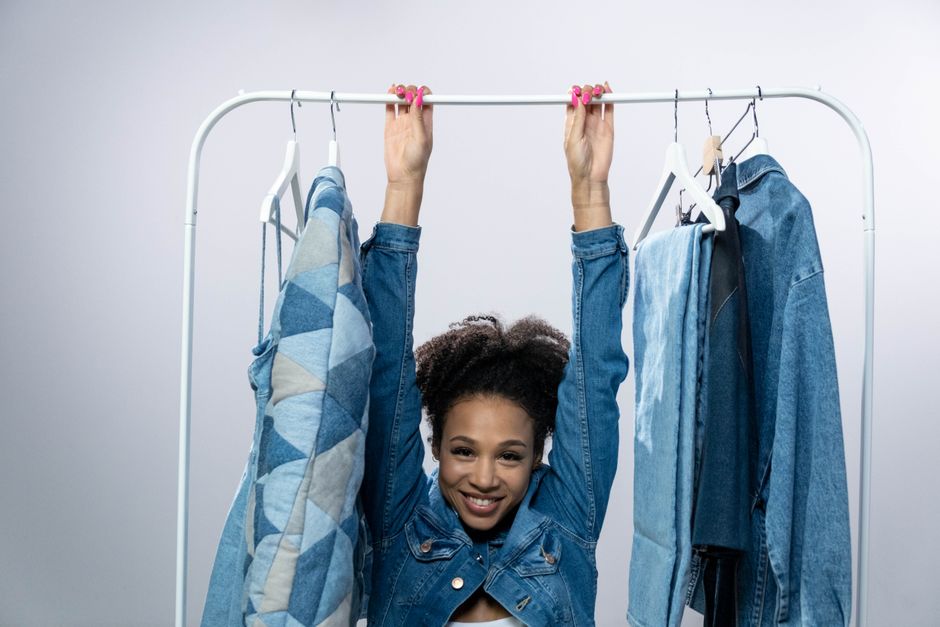
My clear recommendation: spend your first serious budget on a reliable jacket, jeans, and shoes. Those pieces face the most wear and can anchor dozens of outfits. Do not spend $200 on a flimsy blouse because the brand uses recycled packaging.
Best everyday basics by use case
For a soft cotton base layer, the Kotn Essential Crewneck is a strong starting point at about $68. Kotn highlights Egyptian cotton sourcing and farm traceability, but the practical reason to buy it is simpler: a plain crewneck works under shirts, sweaters, and jackets.
For a warm casual layer, the Patagonia Better Sweater 1/4-Zip costs about $139. Its recycled polyester fleece, repair culture, and familiar fit make it a better long-term buy than a cheaper fleece that pills after one season. Pick this only if you will wear fleece often; occasional users should shop secondhand.
Best durable upgrades
For jeans, Nudie Jeans Lean Dean is the best choice for a buyer who values repair access and a clear everyday shape. A typical pair costs about $180, uses organic cotton in many versions, and the brand offers repair services in many markets. Do not buy it for the sustainability story if the slim tapered cut does not suit your wardrobe.
For a daily sneaker, VEJA Campo is a sensible pick at roughly $175. Its leather or vegan versions, organic cotton components in selected models, and rubber sourcing claims give it a clearer materials story than many logo-heavy sneakers. The trade-off is comfort and fit: try it on before committing, because a shoe that rubs your heel will not become ethical through better materials.
For a lower-cost casual layer, the tentree TreeFleece Classic Hoodie sits around $88 and uses recycled or organic fibers in different versions. Buy it for frequent lounging and travel. Skip it if you already own three hoodies. Product verdict: Patagonia is the strongest single new purchase for hard-wearing casual use, while secondhand is smarter for everything you will wear less often.
Ethical wardrobe questions beginners get wrong

Is expensive clothing automatically ethical?
No. Price can pay for better fabric, fairer wages, design, marketing, or simply a larger margin. Inspect construction: dense fabric, straight seams, secure buttons, reinforced stress points, and a care plan you will follow. A $40 secondhand wool coat in excellent condition can be a better choice than a $300 new coat you dislike.
Should I throw away synthetic clothes?
No. Keep wearing usable clothes. Replacing them immediately creates another purchase and sends a serviceable item out of your rotation. Wash synthetic garments less often, use a microfiber-catching laundry bag if appropriate for the garment, and donate only when the item is clean and wearable. Torn or stained pieces may work as household cloths.
When should I avoid buying an ethical label?
Avoid it when the fit is wrong, the care routine is unrealistic, the item duplicates something you own, or the brand gives vague answers about materials and production. Also skip “investment pieces” that require you to change your whole style. Ethical clothes still need to earn their place through use.
The single most important rule is simple: build an ethical fashion wardrobe by buying clothes you will wear repeatedly, maintain properly, and choose again over a tempting new trend.