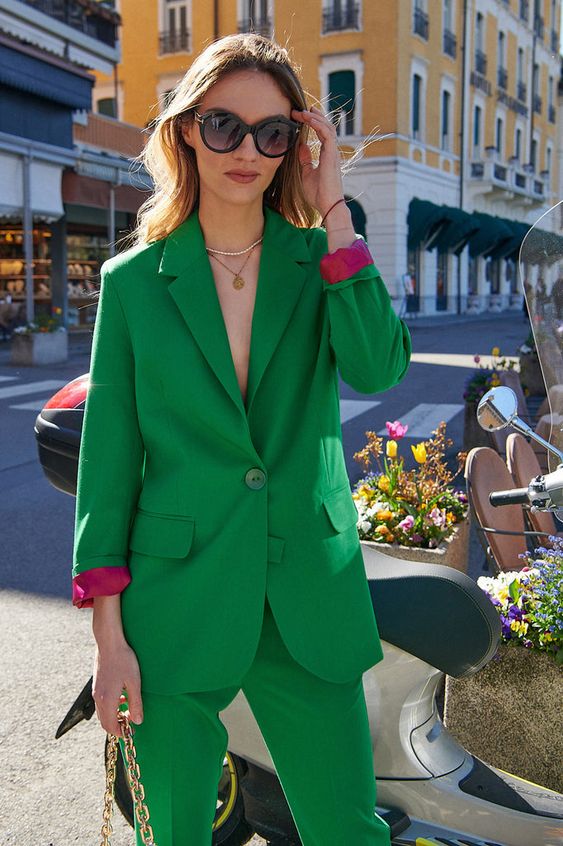
Spring is an inviting time to bring green into your wardrobe. A bright coat can lift familiar jeans, an olive blazer can soften workwear, and an emerald blouse can make white trousers feel ready for longer days. You do not need to wear every shade or build an entirely new wardrobe. Start with a colour you enjoy and give it a place among the clothes you already reach for.
For spring 2024, think of green as a whole palette: soft sage, earthy olive, crisp apple, vivid lime and rich emerald each create a different mood. The most useful choice is the one that works with your everyday outfits. Here are practical ways to find your shade, balance its intensity and wear it through changeable spring weather.
Find a green that feels like you
Green brings to mind leaves, gardens and the return of growth after winter. That association makes it a natural spring colour, but your version can be quiet or bold. Sage feels gentle beside cream and pale denim. Olive works easily with tan, navy and charcoal. Kelly green and emerald make a stronger statement, while lime adds a sharp, playful accent.
Hold a garment near your face in daylight before deciding. Compare a yellow-leaning green with a bluer one, then notice which you prefer alongside your hair, complexion and usual makeup. There is no need to follow a rigid colour rule. If you love a shade but dislike it near your face, try it in trousers, shoes or a bag.

Let a green coat lead the outfit
A green wool coat is useful on cool spring mornings, especially when the layers beneath it are simple. Wear a straight or softly oversized style over a fine knit, cropped jeans and ankle boots. For a dressier option, add a loose midi dress and boots with a comfortable heel. Leave a little space through the sleeves so a lightweight jumper fits underneath.
Choose the weight for your climate. A lighter wool blend may suit chilly days, while a cotton trench or unlined jacket is easier once temperatures rise. If the coat is bright, repeat a neutral such as cream or navy in your top and shoes. This gives the colour room to stand out without making the outfit feel busy.

Build olive layers with different textures
Olive is an approachable starting point for a mostly green outfit. Try cotton trousers with a fine knitted top and a utility jacket, allowing each piece to be a slightly different shade. Mixing smooth cotton, soft knitwear and structured outerwear creates definition even when the colours sit close together.
Check the layers together in daylight: some olives lean brown, while others look noticeably grey. They need not match exactly, but one repeated undertone helps the combination feel considered. A cream T-shirt visible at the neckline can break up the layers. Finish with tan loafers, white trainers or dark brown boots, depending on the weather.

Start small with shoes and accessories
If green clothing feels like a big commitment, use an accessory to test the colour. Green heels bring energy to navy trousers and a white shirt; green flats work with straight jeans and a striped top. Keep trouser hems clear of the ground so the shoes remain visible and the proportions look intentional.
Choose footwear you can comfortably use in your normal routine. A low block heel or loafer can deliver as much colour as a high heel. For another small accent, tie a green scarf to a bag handle or wear simple green earrings. One noticeable accent is enough; matching every accessory can make an easy outfit feel overly coordinated.

Make a green suit work beyond the office
A green suit looks polished with a classic white blouse and understated shoes. For everyday office wear, try olive or a muted forest shade in a fabric that drapes cleanly. Check that the blazer lies comfortably across the shoulders and the trousers allow you to sit without pulling. Good fit matters more than a dramatic cut.
Wear the pieces separately to get more use from them. Pair the trousers with a cream cardigan, or place the jacket over a white T-shirt and dark jeans. A cotton or linen blend can feel relaxed on warmer days, though linen’s creases are part of its character. Keep jewellery simple if the suit itself is vivid.

Give a green blazer an evening turn
A blazer is an easy bridge between daytime and evening. Wear it with a ribbed vest and jeans during the day, then switch to fluid trousers and a satin camisole for dinner. A gently shaped waist can balance wide trousers; a roomier jacket works well over a close-fitting top.
If you add electric green heels, compare them with the blazer first. Similar shades create continuity, while a clear difference looks deliberate. Keep the remaining pieces neutral so the two greens have space.

Pair green with another colour
Green and royal blue make a lively combination. Start with one large block of colour and one smaller accent: a green blouse with blue jeans, for example, or a blue dress with a green bag. If both colours are saturated, simple shapes help the pairing feel clear.
For a softer effect, combine sage with blush pink or olive with a pale blue shirt. Cream provides breathing room between stronger shades. Before leaving, look at the whole outfit, including your coat and bag, and remove an accessory if several pieces compete for attention.

Freshen up an emerald button-down
An emerald button-down with white trousers is a straightforward spring outfit. Cotton poplin gives a crisp finish; a fluid fabric creates softer folds. Tuck the shirt fully into tailored trousers or try a small front tuck with relaxed denim. Roll the cuffs neatly if you want a more casual feel.
Check white trousers in daylight for opacity and choose smooth underwear close to your skin tone. Tan sandals or loafers keep the outfit grounded. On cooler days, add a beige trench and leave the shirt collar visible.

Make a green bag part of your routine
A green handbag can refresh an all-black outfit or add contrast to denim and cream. Choose a shape that fits what you carry: a compact shoulder bag for essentials or a tote for a fuller day. Test the strap over your spring coat and check that the fastening is comfortable to use.


You do not need fifty shades to make green your own. Begin with one piece, build two or three outfits around it, and let comfort and personal taste guide the next addition.