You put on a dress that looked polished on the model, then the waist lands in the wrong place, the bust pulls, and the skirt catches at your hips. The problem may not be your size. It may be the silhouette, the fabric, or a seam placed for a different body shape.
Measure the Fit Problem Before Choosing a Shape
Take three measurements
Use a soft tape measure and record your full bust, natural waist, and fullest hip measurements in inches. Keep the tape level and relaxed rather than pulling it tight. Measure over the undergarments you plan to wear with the dress. If your bust is 46 inches, waist is 42 inches, and hip is 50 inches, start with the size that fits the 50-inch hip when the dress has a fixed skirt. A tailor can reduce extra fabric at the waist, but a tight hip seam has very little room to move.
Read your proportions
Look for the area that needs movement, not the area you want to hide. A fuller bust often needs a V-neck or open square neck. A fuller midsection usually feels better in a dress with a soft waist seam rather than a rigid band. Fuller hips need enough skirt sweep, while a shorter torso can look crowded by a high empire seam. These observations point you toward a shape faster than a size label does.
Your best first silhouette is the one that fits the largest area without strain. From there, adjust neckline, sleeve, hem, and waist placement.
Which Silhouette Solves Your Main Fit Problem?
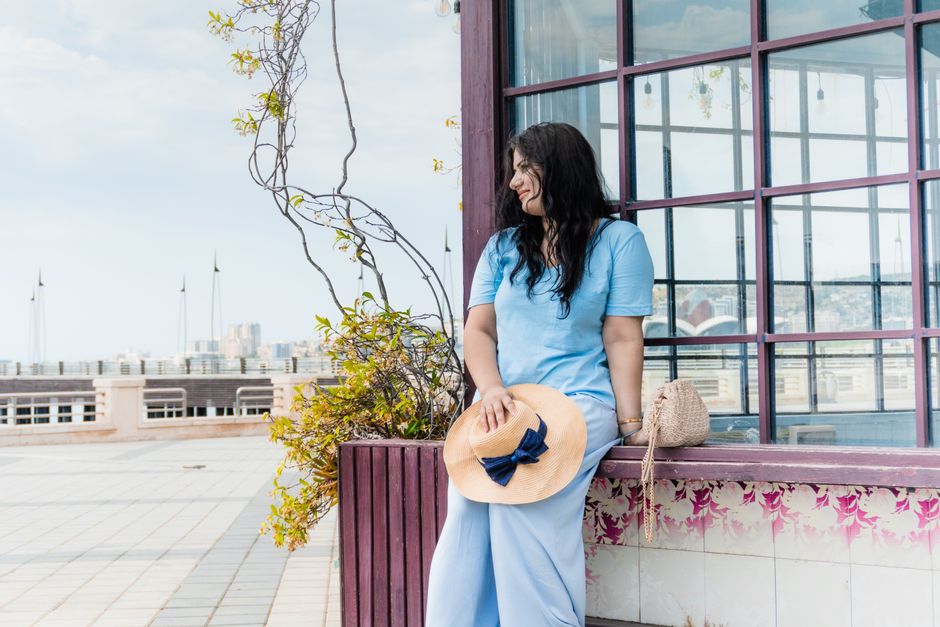
My verdict: start with an A-line dress if you are unsure. It gives the hips room, keeps the upper body defined, and rarely creates a hard horizontal line across the stomach.
Silhouette comparison
| Silhouette | Shape and waist point | Best starting length | Clear advantage |
|---|---|---|---|
| A-line | Fitted at the shoulder, widening from the natural waist | Knee to midi | Balances a fuller hip or thigh |
| Fit-and-flare | Close through the bust and waist, then flares sharply | Knee to mid-calf | Shows a defined waist |
| Wrap | Cross-over front with an adjustable tie | Knee to midi | Allows bust and waist adjustment |
| Sheath | Skims from shoulder to hem with little flare | Knee to midi | Creates a clean, narrow line |
| Empire | Seam sits below the bust and falls away | Midi to maxi | Leaves the midsection unrestricted |
Choose one shape first
Do not order five different cuts in the same size and call the result a fair test. Compare one A-line, one wrap, and one sheath in similar fabric. The A-line wins for sitting comfort and hip room. The wrap wins for a changing bust or waist. The sheath wins for a smooth jacket-ready line, but only when the fabric has enough stretch and the hip measurement matches the chart.
Why Fabric and Seam Placement Change the Same Silhouette
Stretch controls movement
A dress with 3 to 8 percent elastane usually offers more comfort across the bust, waist, and seat than a woven dress with no stretch. Stretch does not fix poor pattern work. It only gives the garment more recovery after sitting, walking, and reaching. Check the fabric blend and the garment measurements instead of trusting the word “stretchy.” A thin jersey can cling to every curve, while a medium-weight ponte can skim the body with a steadier line.
Drape controls the outline
Soft rayon, viscose, and Tencel often fall close to the body and move well through a wrap or bias-cut skirt. They can also reveal a pronounced stomach seam or underwear line. Cotton poplin holds an A-line shape, but it needs room at the bust and upper arm. Ponte and scuba fabrics hold structure, which makes them useful for a sheath or fit-and-flare dress, though thick fabric can add bulk at gathered seams.
Seams create visual stops
A waist seam draws the eye across the body. That can look sharp when it sits at your natural waist and matches the garment’s proportions. It can feel awkward when it lands above the waist or cuts across the widest part of the stomach. Vertical princess seams, an open neckline, and a skirt that continues without extra gathering create a longer visual path. For the most forgiving result, choose a seam that supports the shape instead of one that merely adds decoration.
The strongest combination for everyday wear is a medium-weight fabric, moderate stretch, and a waist seam placed at your natural waist or slightly above it.
Use This Fitting-Room Test in Five Minutes

The five-step check
- Raise both arms. If the dress pulls sharply across the bust or armholes, the upper body needs more room.
- Sit in a chair. The hem should not climb dramatically, and the waist seam should stay close to its intended position.
- Turn sideways. Look for a skirt that tents away from the stomach or pulls across the seat.
- Walk ten steps. A wrap tie should stay closed, and a narrow skirt should allow a normal stride.
- Pinch the fabric at the waist. About 1 to 2 inches of extra ease is useful; a fistful of fabric means the shape is too loose.
The pass-or-return rule
Keep the dress only if you can move, sit, and breathe without adjusting it every few minutes. A dress that looks smooth while standing still but rides up when you sit is not a good fit. Neither is one that needs constant tugging at the bust. The right silhouette should make your routine easier, not turn every movement into a wardrobe check.
Try the test with the bra and shoes you will actually wear. A different bra can change the bust point by more than an inch, and a higher heel can alter the hem enough to change the whole balance.
Best Reference Dresses to Study Before You Buy
My strongest recommendation is to study proven patterns before shopping by appearance alone. These examples are not universal winners, but they show how different cuts handle real sizing, fabric, and construction.
Best everyday jersey: Universal Standard Iconic Geneva Dress
The Universal Standard Iconic Geneva Dress is listed at $128 and runs from sizes 00 to 40. Its Peruvian cotton blend is designed for colorfastness, bounce-back, and resistance to pilling. The dress offers scoop, crew, and V-neck options, plus short and long sleeves. Choose the V-neck version for a fuller bust or the crew neck for a simpler workwear line. Its relaxed shape makes it a strong choice for travel and long days, but it is not the best pick if you want a sharply defined waist.
Best adjustable waist: Catherines Curvy Collection Wrap Dress
The Catherines Curvy Collection Wrap Dress, item 1070580, uses a 95 percent rayon and 5 percent spandex stretch knit. It comes in sizes 0X through 6X, with a 43-inch regular front length and 41-inch petite length. The ruched side detail can soften the stomach area, while the V-neck and three-quarter sleeves create more space around the upper body. Pick this silhouette when your bust and waist need separate adjustment. Skip it if you dislike checking the tie after sitting or bending.
Best dramatic A-line: Anthropologie Somerset Maxi Dress
The Anthropologie Somerset Maxi Dress is listed at $178 and is offered in a plus-size fit when stock allows. Its long, tiered A-line shape creates movement from the waist down and works well for events where a narrow skirt feels restrictive. The volume is the selling point, so keep accessories and shoes streamlined. It is a poor choice for a crowded commute or a short frame if the hem cannot be altered.
Common Plus-Size Dress Fit Questions

Is an empire waist flattering on a plus-size body?
It can be, but the seam must sit directly under the bust rather than across the fullest part of the chest. Choose an empire dress with a defined bust panel and a skirt that falls cleanly. Avoid very high seams with heavy gathering if you want a shaped look; they can make the torso appear shorter and add bulk below the bust.
Can a plus-size shopper wear a sheath dress?
Yes, and a sheath can be the best option for a blazer, interview, or formal setting. Choose at least 3 percent stretch, a back vent, and enough hip ease to sit comfortably. The best sheath skims instead of compressing. If the side seams bow outward or the zipper strains, move up in size and tailor the waist rather than forcing the smaller size.
Which silhouette works best for a short torso?
Choose a gently shaped A-line or a low-set wrap waist. These cuts create length through the upper body without adding a high horizontal seam. A deep V-neck, narrow lapel, or long pendant can extend the line. Avoid a thick belt or a sharply gathered empire seam when the goal is a longer-looking torso.
Fix the Three Mistakes That Ruin a Good Silhouette
Mistake one: sizing from one measurement
Buying from bust size alone is a common reason for tight hips, while buying from hip size alone can create a loose, collapsing neckline. Use the brand’s chart and compare all three measurements. For a fixed-waist dress, fit the largest measurement first. For a wrap dress, prioritize the bust and check that the skirt overlap covers the body while walking.
Mistake two: ignoring length and ease
A midi hem that lands at the widest part of the calf can make the leg line look shorter. Move the hem a few inches above or below that point, then check it with your usual shoes. Ease matters just as much. A garment needs room for sitting, breathing, and normal movement; a body-skimming dress should not leave horizontal stress lines at the bust, stomach, or hips.
Mistake three: buying a shape you will keep adjusting
Do not buy a dress that requires fashion tape, repeated tying, or constant pulling during a normal try-on. That is a failure signal, not a styling challenge. For the most reliable first purchase, choose an A-line with a stable fabric and a waist seam that matches your body. Choose a wrap only when you are willing to manage the tie. The most flattering dress is the one that keeps its shape while you live in it.