What’s the minimum you actually need to look dark academia? Not vaguely studious, not accidentally preppy — legibly, immediately dark academia? That’s the question most guides avoid by listing thirty pieces and calling it a wardrobe.
You need three. The rest is refinement.
The Three-Piece Formula Behind Every Simple Dark Academia Look
Strip any successful dark academia outfit down to its frame and you find the same structure every time: one grounding foundation layer, one textured mid-layer, one bottom that anchors proportion. That architecture is the whole aesthetic. The look rewards restraint more than volume — two or three correctly chosen pieces land harder than five competing layers. More importantly, the three-piece frame is forgiving. Swap a single element and you have a different outfit. That flexibility is what makes it worth understanding rather than just copying.
| Layer | Function | Common Pieces |
|---|---|---|
| Foundation | Sets tonal base; closest to the skin | Cream turtleneck, white button-down, ribbed vest |
| Texture Layer | Adds visual weight; carries the scholarly signal | Tweed blazer, wool cardigan, plaid flannel overshirt |
| Bottom | Grounds proportion; completes the silhouette | Plaid midi skirt, high-waist trousers, corduroy pants |
The texture layer carries the most aesthetic weight. It’s also where proportion errors happen most consistently.
The Blazer as the Anchor Piece
If you own one blazer, you’re already most of the way there. Unstructured plaid or tweed blazers — the kind Zara and ASOS run every autumn — are the aesthetic’s most reliable workhorse. The Zara Checked Wool-Blend Blazer (around $120) shows up in nearly every entry-level dark academia wardrobe because the pattern communicates the aesthetic without requiring anything else dramatic around it.
Color matters here: charcoal plaid, brown herringbone, and forest green wool all drop into the palette without friction. Navy reads nautical. True black reads harsh or goth adjacent. Avoid those as a blazer tone unless everything beneath is warm enough to counterbalance the coolness.
Proportion matters more than pattern. A blazer hitting mid-thigh over ankle-length trousers creates a compressed silhouette — the entire outfit shortens. The same blazer over straight cropped trousers or a knee-length skirt reads intentional and balanced. Fit at the shoulder is non-negotiable regardless of price tier. Dropping shoulder seams make any blazer look borrowed.
What Actually Counts as a Foundation Layer
The white Oxford shirt is canonical but not required. A cream or oatmeal ribbed turtleneck — Uniqlo’s Extra Fine Merino Turtleneck Sweater at $50 is the most consistently recommended option for its weight, finish, and lack of visible branding — works as well under a blazer and adds surface texture where a button-down adds only structure.
The decision between the two depends on your texture layer. If your blazer is heavily patterned — large windowpane check, bold plaid — a solid smooth foundation stops the look from competing with itself. If your blazer is restrained, a single-tone wool or a fine herringbone, a textured foundation provides the visual interest the jacket isn’t supplying on its own.
One practical point: the foundation layer also controls warmth. A merino turtleneck under a blazer in October is genuinely functional. A cotton button-down is not. This matters because dark academia is fundamentally an autumn and winter aesthetic — the heavy fabrics and layered structure that make it visually coherent also make it thermally appropriate for the season it inhabits best.
Why Most Dark Academia Attempts Tip Into Costume

One principle explains most failures: the aesthetic is academic, not theatrical. It draws from actual university dress of the 1930s through 1960s — practical, restrained, not elaborate. One dramatic piece reads as a deliberate choice. Two dramatic pieces create visual tension. Three dramatic pieces read as a costume rack.
One focal piece per outfit. Build everything else quietly around it.
The Color Palette That Signals Dark Academia Without Any Other Work
Color is the single variable that most determines whether an outfit reads dark academia or just reads neutral. Get the palette right and even simple, inexpensive pieces — a thrifted cardigan, basic straight trousers — register immediately. Get it wrong and well-chosen, carefully fitted pieces still miss the mark entirely.
The palette is built on warm neutrals anchored by one darkening shade. These four cover the majority of successful looks:
The Core Four Shades
- Ivory or cream — warmer than white, reads aged and literary without being dingy; avoids the sterile cleanliness that bright white introduces into what should feel like a worn library rather than a lab
- Caramel or cognac brown — the palette’s most flexible mid-tone; works in knitwear, shoes, bags, leather accessories, and at every scale from a belt to a full coat
- Forest green or hunter green — the aesthetic’s version of navy; more scholarly in feel, less expected than brown, especially effective as a blazer or outerwear tone
- Charcoal gray or deep plum — the darkening anchor that stops the palette from reading as cottagecore instead of academia; provides necessary contrast against cream or tan foundation pieces
What’s absent from that list is significant. Bright white, true black as a dominant tone, pastels, and the blue-gray territory are all missing. Those shades don’t disqualify an outfit but they don’t build one either. They dilute the palette’s coherence without contributing to it.
Using Brown Without Washing Out
Brown is the palette’s center of gravity, and it’s where lighter complexions can struggle. A head-to-toe brown-and-cream combination against fair skin can lose all contrast — no definition, no visual separation between pieces. The fix isn’t swapping out the brown. It’s adding one contrast point.
A darker bag, leather shoes in a deeper tone like oxblood or dark cognac, or a plaid layer with a darker ground color all reintroduce the contrast the near-monochrome palette removes. The contrast point doesn’t need to dominate visually — it just needs to exist. One well-placed dark element does the work.
For deeper skin tones, the full brown-and-cream palette tends to land cleanly. The issue there shifts to proportion rather than color — a voluminous cream blouse can overwhelm a silhouette that a more fitted version would elevate.
Why Black Usually Disrupts This Palette
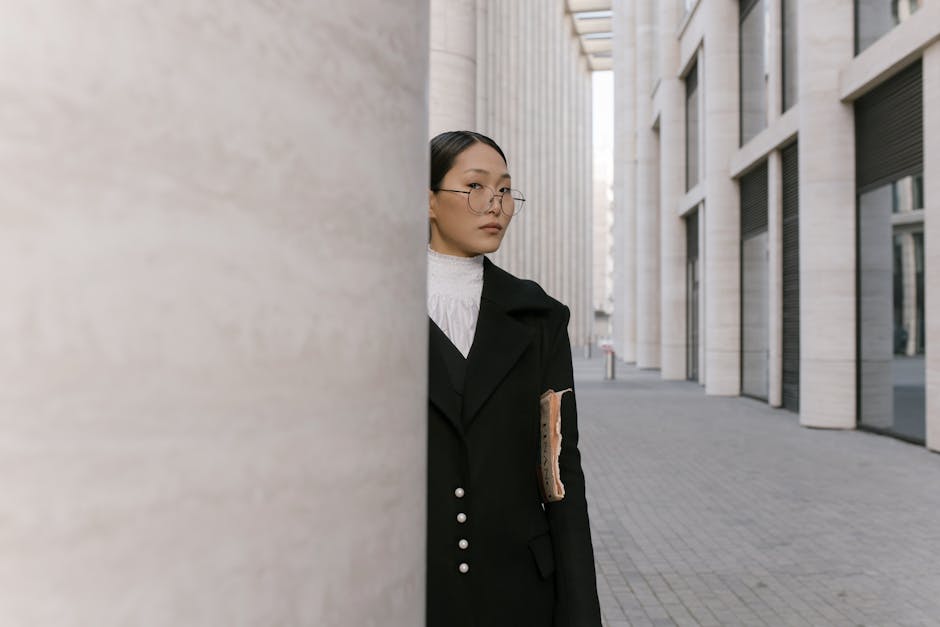
Black isn’t a neutral in dark academia — it’s a disruption. A black blazer reads goth or contemporary minimalist, not scholarly. Black trousers under a warm tweed blazer creates a temperature collision: the upper half communicates warmth and history while the lower half reads cool and modern.
The exception is small accessories. A black leather satchel or black Oxford shoes can anchor a look without pulling the whole palette cold, because accessories occupy a small visual plane. The problem arrives when black dominates a full layer. Swap black trousers for charcoal, very dark brown, or deep plum. The outfit reads differently in a way that’s immediately visible even in a mirror glance.
Five Outfit Formulas at Every Price Point

These are complete looks — foundation through shoes — not ingredient lists. Each uses currently available pieces at a specific price tier.
Under $150: The Thrift-Forward Build
- Cream or oatmeal turtleneck — thrifted, ASOS, or Shein basic (~$15–25)
- Plaid or tweed blazer — Depop, ThredUp, or local thrift (~$20–40)
- High-waist corduroy or wool trousers — H&M or thrifted (~$30–40)
- Brown or oxblood loafers — Target’s A New Day line or thrifted (~$25–35)
Total: $90–$140. Tweed and plaid look expensive regardless of actual price. Nobody examining a photograph — or even a room — can identify a $35 thrifted blazer versus a $250 one if the fit is correct. The fit is the only variable that matters at this tier, not the label.
The Mid-Range Build ($250–$450)
This is where durability starts compounding. Wool trousers that drape correctly, a blazer that holds its shape after cleaning, leather shoes that age rather than crease — these differences are visible up close even when they don’t photograph differently.
| Piece | Item | Approximate Price |
|---|---|---|
| Foundation | Uniqlo Extra Fine Merino Turtleneck | $50 |
| Texture Layer | Zara Checked Wool-Blend Blazer | $120 |
| Bottom | Everlane The Relaxed Chino (camel or brown) | $78 |
| Shoes | Dr. Martens 1461 Oxford (tan or oxblood) | $130 |
| Bag | Fjällräven Kånken (dark olive or brown) | $110 |
At full price this runs around $488. In practice, the Zara blazer and Everlane trousers both go on sale seasonally, bringing the total closer to $330–$370. The Dr. Martens 1461 Oxford in tan is the single best footwear investment for this aesthetic specifically. It bridges casual and semi-formal without effort, ages well with conditioning, and costs less per wear over five years than almost any comparable shoe at the price point.
What to Skip When You Want Simple, Not Staged
The most-photographed dark academia pieces are often the ones that complicate simple outfits most quickly.
Do you need a plaid skirt?
No. The plaid midi skirt is the aesthetic’s most obvious visual shorthand — and its most saturated cliché. If you own one, it works. But if you’re buying one specifically to achieve the look, a well-fitted pair of charcoal or brown trousers does more across more outfits with less effort. The plaid skirt is a one-note piece. The trousers are the base of five different looks.
Are capes worth adding?
Capes photograph beautifully. They wear awkwardly — cold at the shoulders, impractical for carrying any bag, and theatrical in real-world settings rather than scholarly. A structured wool overcoat in camel or dark brown, like the H&M Single-Breasted Wool-Blend Coat (~$150) or the Mango Herringbone Coat (~$180), carries the same aesthetic signal with far more function. Both layer over blazers cleanly. A cape cannot.
Does everything need to be vintage or thrifted?
No. The appeal of vintage in this aesthetic isn’t about age — it’s about texture. Worn leather, washed linen, slightly felted wool carry a visual character that reads as historical and layered. You can source that same texture from new pieces.
Free People’s knit vests and oversized cardigans have the right visual weight. COS and Arket produce structured, textured fabrications — heavy ponte trousers, dense wool knits, structured cotton shirts — that achieve the same effect without requiring any secondhand sourcing. The question isn’t vintage versus new. It’s: does this piece have texture, weight, and warmth in its material? If yes, it belongs here regardless of where it came from.
How much jewelry is too much?
One piece. Maybe two if one is small. A signet ring and a fine gold chain necklace is a complete jewelry look for this aesthetic. Layered pendant necklaces pull toward maximalism. Hoops read too casual. Vintage-style brooches work only when the rest of the outfit is bare enough to carry the weight — which is rare when you’re already wearing a blazer and turtleneck.
Start with the blazer, the turtleneck, and warm-toned trousers. Add shoes with substance — the Dr. Martens 1461 or a leather loafer in tan or oxblood. That’s a complete dark academia outfit. Everything after that is your own iteration, not a requirement the aesthetic imposes on you.