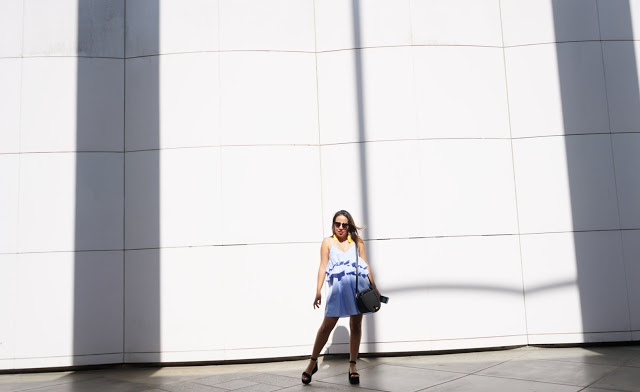
Ruffles have been worn continuously for over 500 years — they appeared on Elizabethan ruffs in the 1560s, vanished, returned in the 1960s, and have never fully left fashion since. Yet most people who buy a ruffle blouse wear it exactly once, feel theatrical, and shove it to the back of the closet.
The problem isn’t ruffles. The problem is understanding what type of ruffle you’re working with and what it needs from the rest of your outfit.
Why Ruffles Feel So Hard to Pull Off
Picture this: you see a beautiful ruffle-sleeve blouse at Zara. Structured, feminine, editorial on the hanger. You buy it. You get home. You put it on and immediately feel like you’re about to announce a school fundraiser from 1994.
This happens constantly, and there’s a specific reason.
Ruffles are high-volume details. They take up visual space the way a bold pattern does — except they also add physical volume. When the rest of your outfit is also competing for attention, the ruffles tip the whole thing into overdone. The ruffle needs breathing room from everything else in the look.
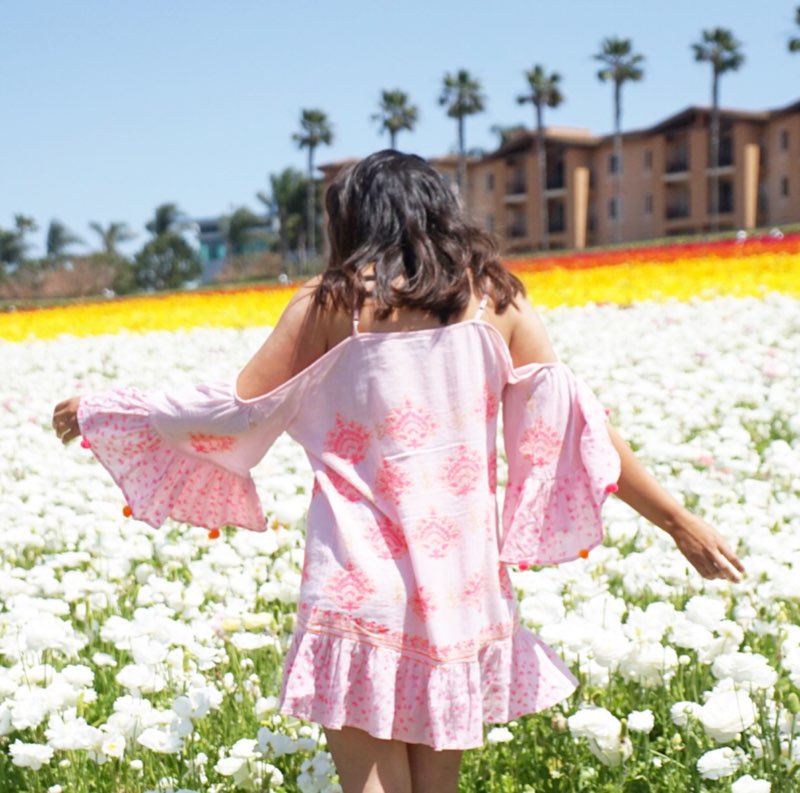
There’s also a proportion issue. A ruffle at the shoulder adds visual width there. A ruffle at the hem adds volume at the hip. Neither is inherently bad — but if you don’t account for where that volume lands on your body, you’ll feel awkward in the piece even when the garment itself is well-made and correctly sized.
And then there’s the fabric problem nobody talks about enough. Cheap ruffles are made from stiff synthetic material that doesn’t move. A quality ruffle cascades and shifts when you walk. A bad ruffle just sticks out. Permanently. Discount stores are full of them, and no amount of styling saves a rigid ruffle.
The Confidence Factor Nobody Talks About
There’s a real psychological component here. Ruffles read as “I made an effort.” That feels risky if you’re not used to standing out. People who wear ruffles well have usually decided they don’t mind being noticed — not because they’re extroverted, but because they’ve worn the piece enough times to stop thinking about it. The first time you wear any statement piece feels strange. By the third time, it’s just your blouse.
The Most Common Ruffle Mistake
Pairing a ruffle top with other textured or patterned pieces. Ruffle blouse plus printed wide-leg trousers plus platform shoes equals three statements fighting for one outfit. Pick one. The ruffle is already doing a lot of work.
The second most common: buying ruffles in heavy fabric. Ruffles in thick cotton, structured polyester, or stiff linen look costume-y almost by default. The same ruffle silhouette in chiffon, crepe, or lightweight viscose falls naturally and reads as elegant. The design is identical. The fabric is everything.
A Field Guide to Ruffle Types
Not all ruffles work the same way. The category breaks into five distinct types, each with different styling rules and different occasions where they actually make sense. Getting this wrong is how people end up wearing a tiered cotton skirt to a work meeting and feeling underdressed — or overdressed — for no reason they can name.
| Ruffle Type | Where It Appears | Best Fabric | Best Occasion | Styling Risk |
|---|---|---|---|---|
| Cascade Ruffle | Front of blouse, neckline | Chiffon, silk, crepe | Work, dinner | Low |
| Shoulder Ruffle | Cap sleeve, off-shoulder trim | Cotton voile, georgette | Casual, weekend | Medium |
| Hem Ruffle | Skirt or dress hem | Lightweight woven, linen | Everyday, brunch | Low |
| Tiered Ruffle | Full skirt or dress, stacked layers | Cotton, broderie anglaise | Casual, garden party | High |
| Collar Ruffle | Neckline trim only | Any, depends on base garment | Work, elevated casual | Low |
The low-risk ruffles — cascade, hem, collar — work in most everyday contexts because they add detail without adding serious volume. The tiered ruffle is a full commitment. It’s the most maximalist form and needs a stripped-back styling approach to work outside of a special occasion.
How to Identify a Quality Ruffle Before You Buy
In-store: shake the garment slightly. A quality ruffle in the right fabric will move. If it stays rigid, skip it. Online: zoom in on the fabric description. Anything listed as “100% polyester” with no texture descriptor is likely a stiff ruffle that won’t drape correctly. Look for terms like “woven,” “crepe,” “georgette,” “chiffon,” or “viscose” — these are the fabrics that make ruffles look right.
Volume Placement and Body Proportions
Ruffles add visual width wherever they sit. This is neutral information — not good or bad. If you carry your weight in the midsection, avoid cascade ruffles centered on the torso; try collar or hem ruffles instead, which pull the eye up or down. Shoulder ruffles add width at the top, which works well for pear-shaped bodies to balance proportions. Use placement deliberately rather than ignoring it.
The Only Styling Rule You Actually Need
One ruffle per outfit. That’s it. Pick one ruffle element — sleeve, hem, collar, or bodice — and let everything else be solid, clean, and minimal. The ruffle is the statement. Treat it that way and you almost can’t go wrong.
How to Build a Ruffle Outfit from Scratch
Here’s the actual process, starting from nothing.
Step 1: Choose the ruffle piece first. It’s your anchor. Everything else serves it. If you start with your jeans and then try to find a ruffle piece that fits the vibe, you’ll end up with a conflicted outfit that satisfies neither direction.
Step 2: Identify where the volume lands. Ruffle at the top — shoulder ruffles, cascade blouse — balance it with slim or straight-leg bottoms. Not wide-leg. Not flared. Ruffle at the hem — tiered skirt, ruffle-hem dress — go for a fitted, minimal top. The body needs a counterweight.
Step 3: Strip back the accessories. Ruffles are already decorative. Statement earrings, a layered necklace, AND a ruffle collar is three things asking for attention at once. One accessory max. Small gold hoops with a ruffle blouse. A simple leather belt with a ruffle skirt. That’s the ceiling.
Step 4: Choose footwear that grounds the look. Loafers, ankle boots, or block-heeled mules keep ruffles modern and wearable. Strappy heels push the whole thing toward formal occasion wear — which is fine if that’s the goal, but be intentional. Chunky white sneakers with a hem-ruffle midi skirt is genuinely one of the better casual combinations in the current wardrobe.
Step 5: Match fabric weights. A lightweight chiffon ruffle blouse looks wrong tucked into stiff, structured denim. Match weight to weight. Lightweight ruffle top — soft denim or lightweight trousers. Structured cotton ruffle — medium-weight trousers. The garments should feel like they belong to the same world.
The Tuck Question
Tuck the ruffle blouse. Almost always. Left untucked, a full-length ruffle blouse over trousers doubles the visual volume and reads as unfinished. A front tuck into high-waisted bottoms cleans the silhouette immediately, even if it’s just a small informal fold at the front.
Wearing Ruffles Under Outerwear
A ruffle blouse under a blazer works well — size up half a size in the blazer to account for sleeve volume without pulling across the shoulders. Under a trench coat, a ruffle collar peeking out looks intentional and put-together. Under a chunky oversized knit? Skip it. The texture contrast doesn’t resolve cleanly, and the ruffle disappears under the volume of the knit anyway.
Ruffle Pieces That Are Actually Worth Buying
Start simple. Not with a full tiered ruffle dress — that’s an advanced commitment that requires serious styling awareness. Start with one of these three entry points:
- A cascade ruffle blouse from Zara (typically $35–$50). Their solid-color versions in white, black, and ecru have front ruffles minimal enough for office environments. Pair with tailored trousers and loafers and you’re done. This is the easiest entry point into ruffles and one of the most versatile pieces you can add to an existing wardrobe.
- A hem-ruffle midi skirt from Mango ($60–$80, usually in a linen or crepe blend). A single ruffle at an otherwise plain hem adds movement without commitment. Wear it with a white tee and sneakers for casual, or a fitted black turtleneck and ankle boots for an evening look. The same skirt does both without effort.
- A ruffle-sleeve blouse from H&M’s Conscious collection (around $30, cotton voile). The sleeve ruffle doesn’t add bulk to the torso, which makes it easy to tuck and style with everything from straight-leg jeans to work trousers. At that price, it’s a low-risk way to test whether the silhouette works for you before investing more.
For a longer investment, Anthropologie’s Maeve line does ruffle dresses in the $120–$180 range using real crepe and chiffon. They drape correctly because the fabric is right — it’s not a design difference from cheaper versions, it’s purely material quality. ASOS also has budget options, but check fabric composition before buying. Their chiffon ruffle pieces work. Their stiff polyester versions do not.
If you want one ruffle piece that does everything, the Zara cascade blouse in white or black is the answer. It reads as polished at work, works for dinner, and pairs with nearly anything already in your wardrobe.
When Ruffles Actually Don’t Work
Do ruffles work in corporate environments?
Yes, with limits. A cascade or collar ruffle blouse in a neutral color is fine in most offices. A tiered ruffle dress or a heavily ruffled statement sleeve is not — it reads too decorative for formal professional settings. The cascade ruffle reads as feminine and polished. The tiered ruffle reads as festive. Know which one you’re wearing before you walk into the room.
Are ruffles a seasonal thing?
No, but fabric determines the season more than the ruffle itself. A lightweight chiffon ruffle blouse is spring and summer. The same silhouette in heavier crepe or satin works through fall and winter. Linen hem-ruffle midi skirts are genuinely warm-weather only — the fabric, not the ruffle, sets that limit. The design detail is year-round. The material isn’t.
What about ruffles and plus-size dressing?
The same placement principles apply regardless of size. Ruffles add visual width wherever they land — use that deliberately. Collar ruffles and hem ruffles draw the eye to the neck and hemline respectively, which creates a longer vertical line. Torso-centered cascade ruffles widen the midsection. Neither is wrong; it’s about choosing the silhouette you want rather than avoiding a category that works for every body when styled correctly.
How to Care for Ruffle Garments at Home
Ruffles need slightly more care than a plain blouse, but the actual effort is minimal. Two tools make the difference: a steamer and a mesh laundry bag.
For wrinkles: use a steamer, not a flat iron. Pressing directly onto ruffles with a flat iron crushes the shape permanently. The Conair Turbo ExtremeSteam ($40) and the Rowenta IS6520 ($60) both work well for home use. Hold the steamer 2–3 inches from the fabric and let the steam do the work. Don’t touch or press the ruffle while it’s still damp — it needs to reset on its own.
For washing: cotton and linen ruffles handle a gentle machine cycle fine inside a mesh laundry bag. The OXO Good Grips mesh bag ($10–$12) is durable enough to last years. Chiffon, georgette, and silk ruffles need hand washing in cold water with a small amount of Woolite or similar delicate detergent. Never wring them. Press gently between a clean towel to remove excess water, then hang to dry flat or on a padded hanger.
If a ruffle has flattened after washing, steam it while shaking the fabric gently to encourage the ruffle to reopen. For tiered skirts that have lost their structure, light spray starch — Niagara ($4 at most grocery stores) — helps the layers hold their shape. Spray lightly, wait 30 seconds, then steam.
The difference between a maintained ruffle piece and a neglected one is visible from across a room. A $40 blouse cared for properly looks like it cost significantly more. A $150 blouse washed on hot and tumble-dried looks worse than either.
Fashion’s current direction toward architectural, sculptural ruffles — details that read as constructed rather than decorative — suggests the category is only going to get more interesting. Designers are increasingly treating ruffles as structural elements rather than embellishment, which means the gap between “costume-y” and “editorial” is closing. The ruffle has more range ahead of it than it has behind it.